A Piece of Fabric That Changes Lives
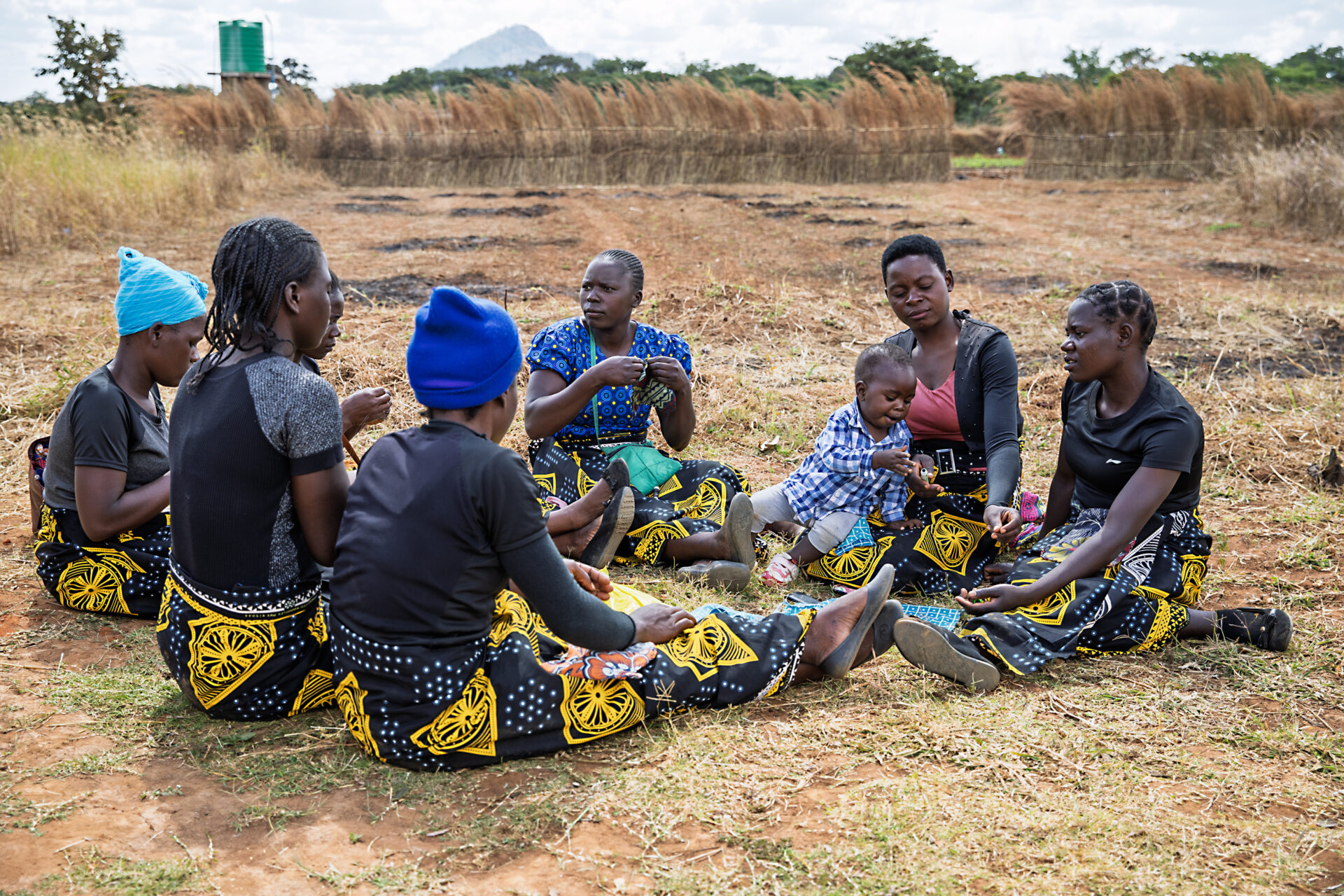
On a field just outside a village near Kasungu in Malawi, seven women are sitting in a circle. They are wearing matching chitenges – colourful pieces of fabric that identify them as members of the same group. Beside them lie the materials they use to sew reusable menstrual pads. For these women, the pads represent much more than menstruation. They are about livelihoods, education and the opportunity to shape their own lives.
It is a warm morning in Kasungu. The women greet us on the dry field with singing and dancing. They later explain that this is exactly how they begin every meeting – with songs about their work and all the positive things that come from it. After exchanging greetings, they settle into a circle on the ground and take out scissors, needles, thread and pieces of fabric. One of the women has brought her young child along. As they work, they tell us about their lives, their businesses and the group they belong to.
A short distance away is an enclosed vegetable garden. A little further on stands a school, and we can hear children laughing and playing in the schoolyard.
The connection between these places will soon become clear.
The women in the Tikundani group have spent the three years since they first came together trying to gain greater control over their finances in a world where very little can be taken for granted. They grow crops, sell what they can, raise goats and save money together. Twice a month, they meet in their VSL group – Village Savings and Loans – where they can borrow money to invest in their businesses.
The group receives support through one of IM’s local partner organisations. As part of a new project, the women have also learned how to make menstrual pads.
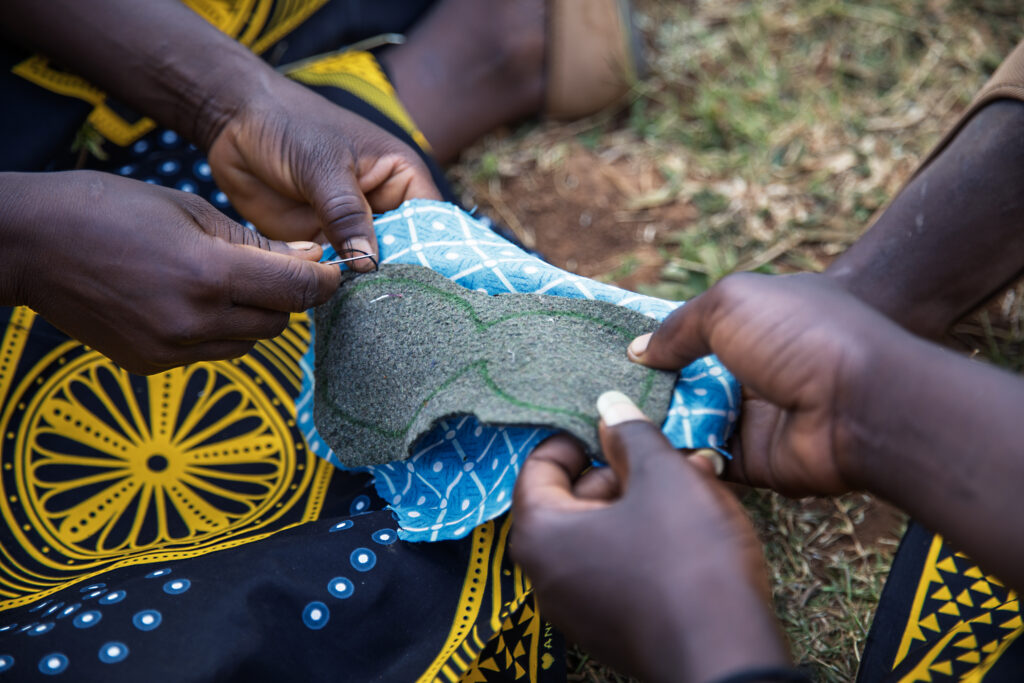
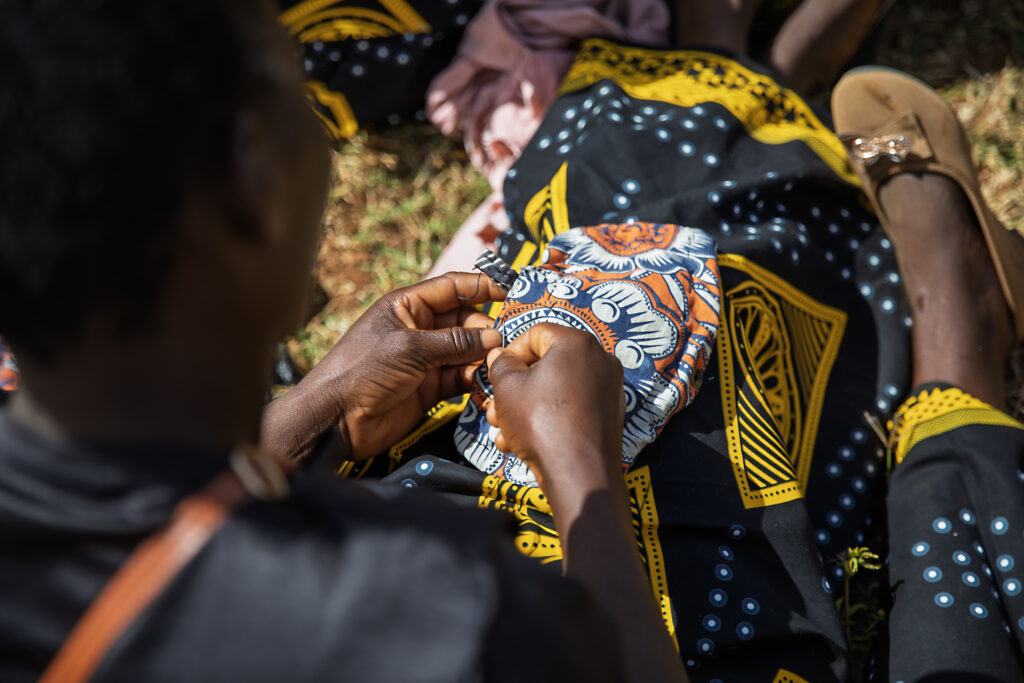
It takes about half an hour to make one pad. It consists of several layers of fabric and is filled with a soft, felt-like wool material that absorbs liquid. Once used, it can be washed and reused.
It is a simple product. But for the women, it is part of something much bigger – work that is improving their lives, as well as those of other women and girls.
The money that is missing
Several of the women had to leave school when they were young because their families could not afford the school fees. Then came marriage, children and adult lives in which making ends meet became more important than thinking about what they themselves might want to do.
Today, they see education differently.
They have seen how people who have had the opportunity to study also gain access to other opportunities. They can find jobs, earn a more secure income and have greater freedom to make decisions about their own lives.
But education is not the only thing that costs money. A small business needs capital to get started. Farming requires seeds and materials. A family needs food. And as the climate changes and harvests become increasingly unpredictable, it is difficult to know how much money will come in next week or next month.
“If no one can afford to buy, we don’t earn any money,” says Monicca Banda, sitting with a piece of beautifully patterned fabric in her hands as she sews a pad.
The VSL group has become a way of managing some of this uncertainty. The women save money together and can borrow from their collective savings to invest in their businesses.
For women who lack property or other forms of collateral, getting a loan elsewhere can be extremely difficult. Through the group, they instead have the opportunity to invest in the work they do themselves.
The women say their husbands support and encourage them to continue. Sometimes they also help repay a loan if a business has not done well. One woman tells us that her family can now afford to eat chicken instead of beans.
These may sound like small, everyday things, but for the women they represent something much greater: the ability to stand on their own two feet.
“We used to bleed through very quickly”
The reusable cloth pads became part of the group’s activities through Girls on the Lead, the local organisation that works in partnership with IM. The women have received training in how to make them, and the first pads they produced during the training were distributed free of charge to girls at the nearby school. Each girl received five pads.
As the women talk about their work, they also remember what things were like when they were girls themselves. Back then, they used strips of fabric torn from old clothes, which they scrunched up to make improvised pads.
“They didn’t work very well at all, and we used to bleed through very quickly,” says Chisomo Mbewe, while her young son tries to draw on one of the pieces of fabric with a felt-tip pen.
This meant that they often stayed home from school when they had their periods, missing important lessons. Now they have learned how to make pads that offer much better protection.
The material cost is around 2,000 Malawian kwacha, approximately SEK 11, and the women plan to sell them at markets in their own village and neighbouring villages for around 3,500 kwacha, or approximately SEK 20.
This is where the two parts of the work come together. For a girl, a pad can make it possible to attend school even during her period. For the woman who makes it, the very same product can become a source of income.
And the knowledge is not meant to stay with the women in the group.
The school on the other side of the field
Some of the pupils on their break have come closer. They stand at the edge of the field, giggling and watching us and the women. The school is just a short walk away. For Girls on the Lead, this is also where the next stage of the project will take place. In the next phase, the girls themselves will learn how to make the menstrual pads, and the organisation is working with teachers who will set aside time for the lessons.
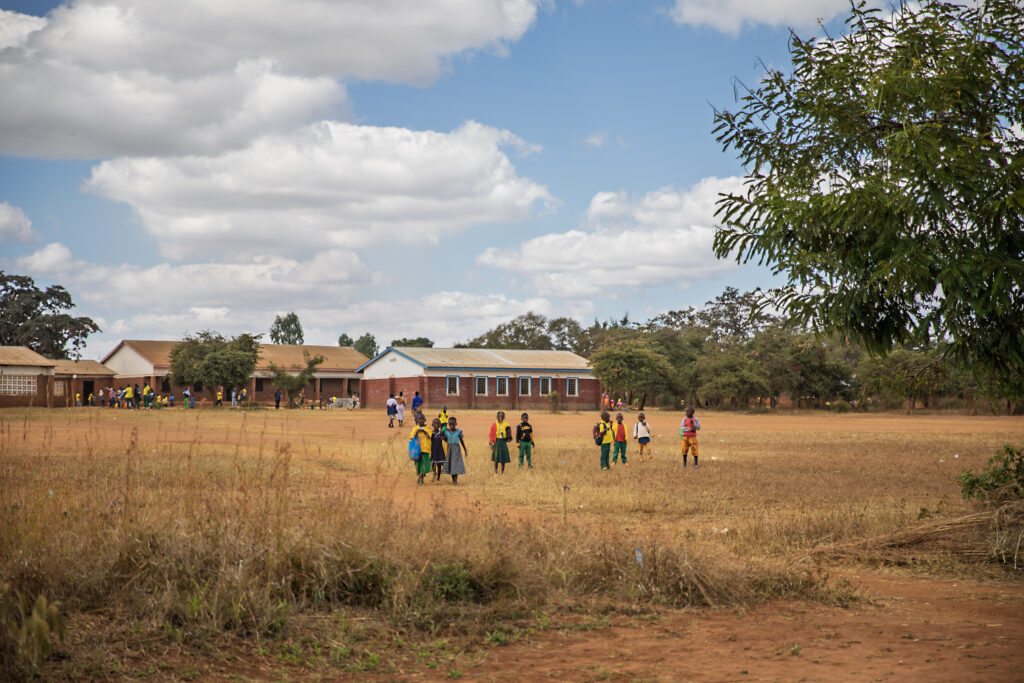
Many girls get their first period at around nine years of age. Without access to menstrual products, menstruation can make it difficult to attend school. They may be afraid of bleeding through their clothes, feel ashamed or simply have nothing available to use.
The women know exactly what that feels like. But they don’t just want the girls to receive ready-made pads. They want them to learn how to make the pads themselves.
There is a difference between being given something and knowing how to make it yourself. One solves a problem for the moment; the other provides knowledge that can last and be passed on.
“What can we do?”
At the Girls on the Lead office in Kasungu, we meet Susan Chisi, who founded the organisation in 2020. It is easy to understand that Susan finds it difficult to stand by and watch when something needs to change. She speaks passionately about girls dropping out of school, women who lack opportunities to support themselves and how financial insecurity limits people’s ability to make decisions about their own lives.
When the Covid-19 pandemic hit, she saw these problems intensify. Girls stopped attending school, many were forced into child marriages and families struggled even more to make ends meet. But the problems were not new. The pandemic simply made them harder to ignore.
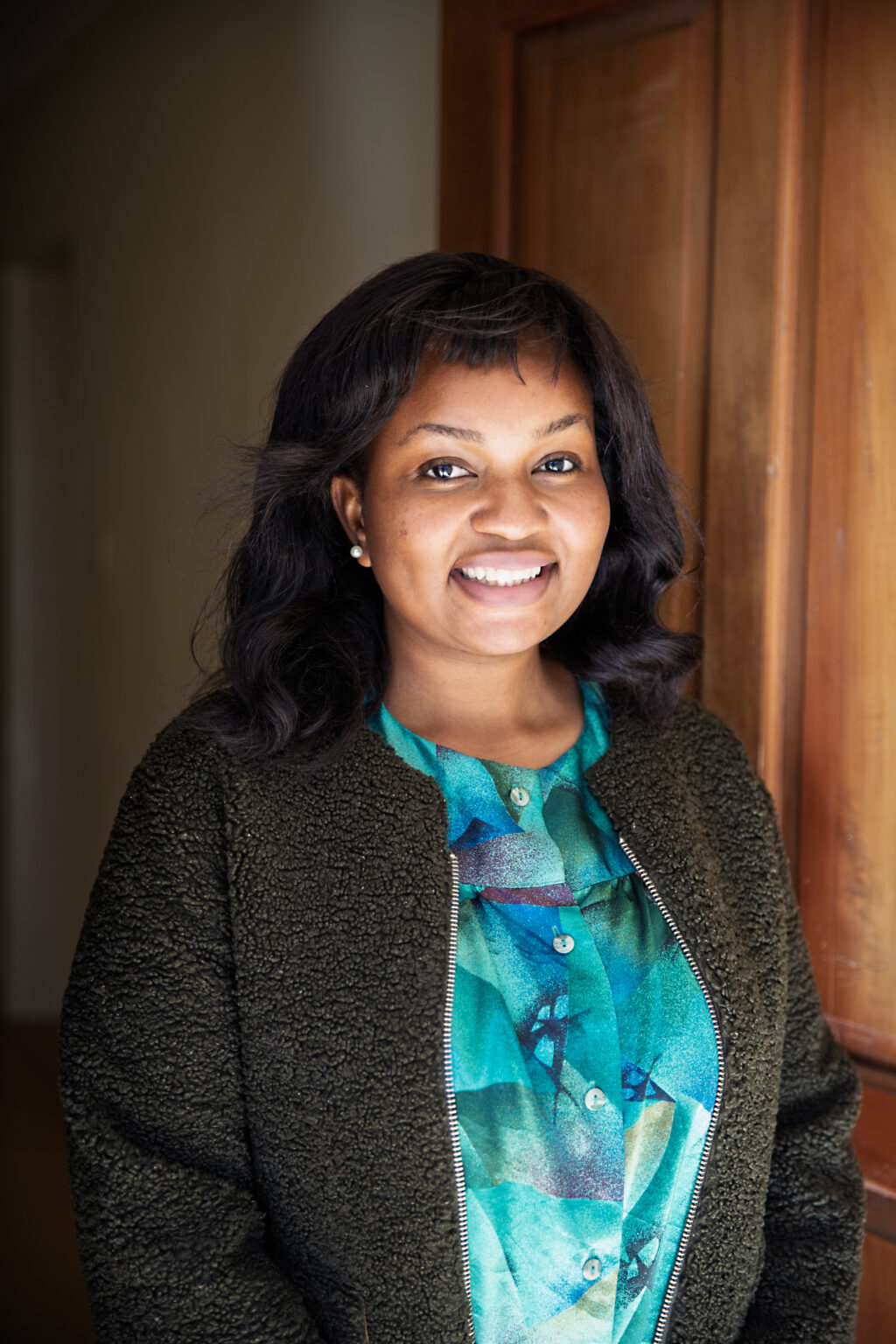
Susan Chisi founded Girls on the Lead during the pandemic, when girls were particularly affected by school closures. Photo: Malin Kihlström
Susan began raising funds and organising with other young feminists. The question was simple: What can we do? That was how Girls on the Lead began.
Since then, the organisation has grown from supporting around 30 women to reaching approximately 350. One important approach is to train so-called “champions”, who then pass their knowledge on to other women. This allows training to reach far beyond those who initially take part.
Girls on the Lead works in several areas, including women’s economic empowerment, financial literacy, entrepreneurship and climate-resilient livelihoods. Menstrual products are part of this broader work. For Susan, these are not separate projects, but different ways of strengthening women’s and girls’ ability to take greater control over their own lives.
Two goats and a beginning
The Tikundani group has received support from Girls on the Lead in several ways. When the women first organised themselves as a group, they received training in financial literacy and business management. Five of the women were each given two goats to help them start their own businesses. Through a so-called pass-on system, the goats’ offspring will eventually be passed on to others.
It is the same basic idea behind the work with menstrual products: something one woman receives can create opportunities for someone else, too.
When knowledge is passed on
As our conversation draws to a close, the women are still sitting together in their circle. They laugh and chat as they sew. It is clear that they are good friends, not just colleagues.
These women were once girls who did not always have the opportunity to stay in school. Now they are learning something that can make it easier for other girls to do just that.
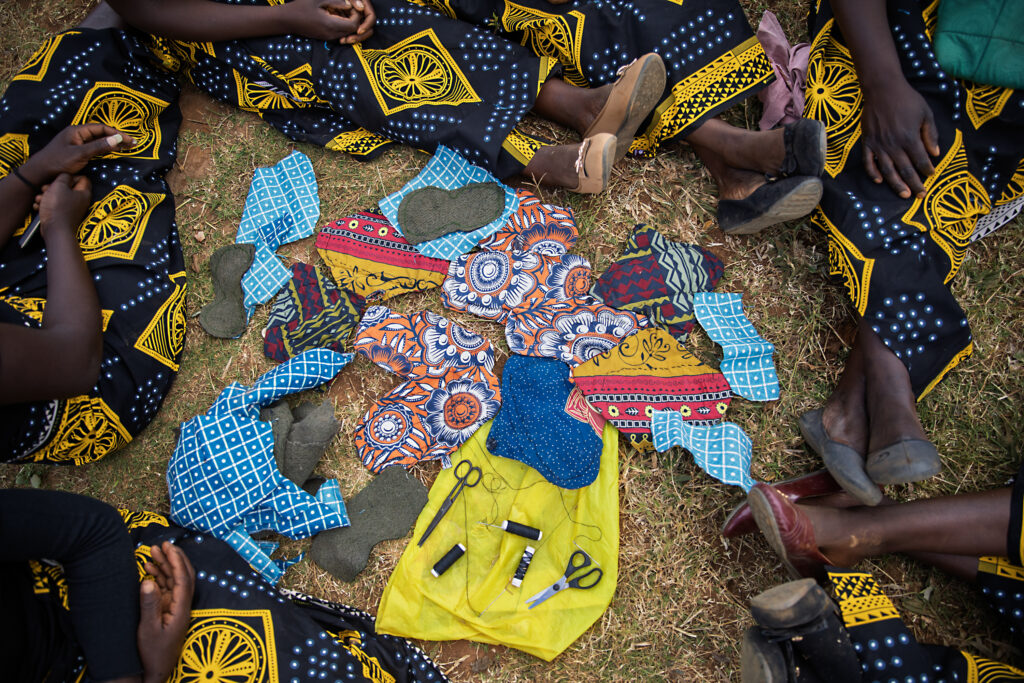
On the other side of the field, most of the pupils have returned to their classrooms.
It is easy to think that this is all about a menstrual pad. But really, it is about what can happen when someone gains knowledge and the opportunity to put it to use. What happens when women organise together and gain access to money they can decide how to use themselves. What happens when a girl can go to school even during the week of the month when she has her period.
The red thread runs from woman to woman, from girl to girl and on to the next generation.
On a field outside a village near Kasungu, it begins with a piece of fabric.
Text and photos: Malin Kihlström
A menstrual pad can mean more than you think
For a girl – The opportunity to attend school even when she has her period.
For a woman – A new product to sell and an opportunity to earn an income.
For the group – Knowledge that can be shared with others.
For the next generation – Knowledge that girls themselves can pass on.