Hello there, Dalia…
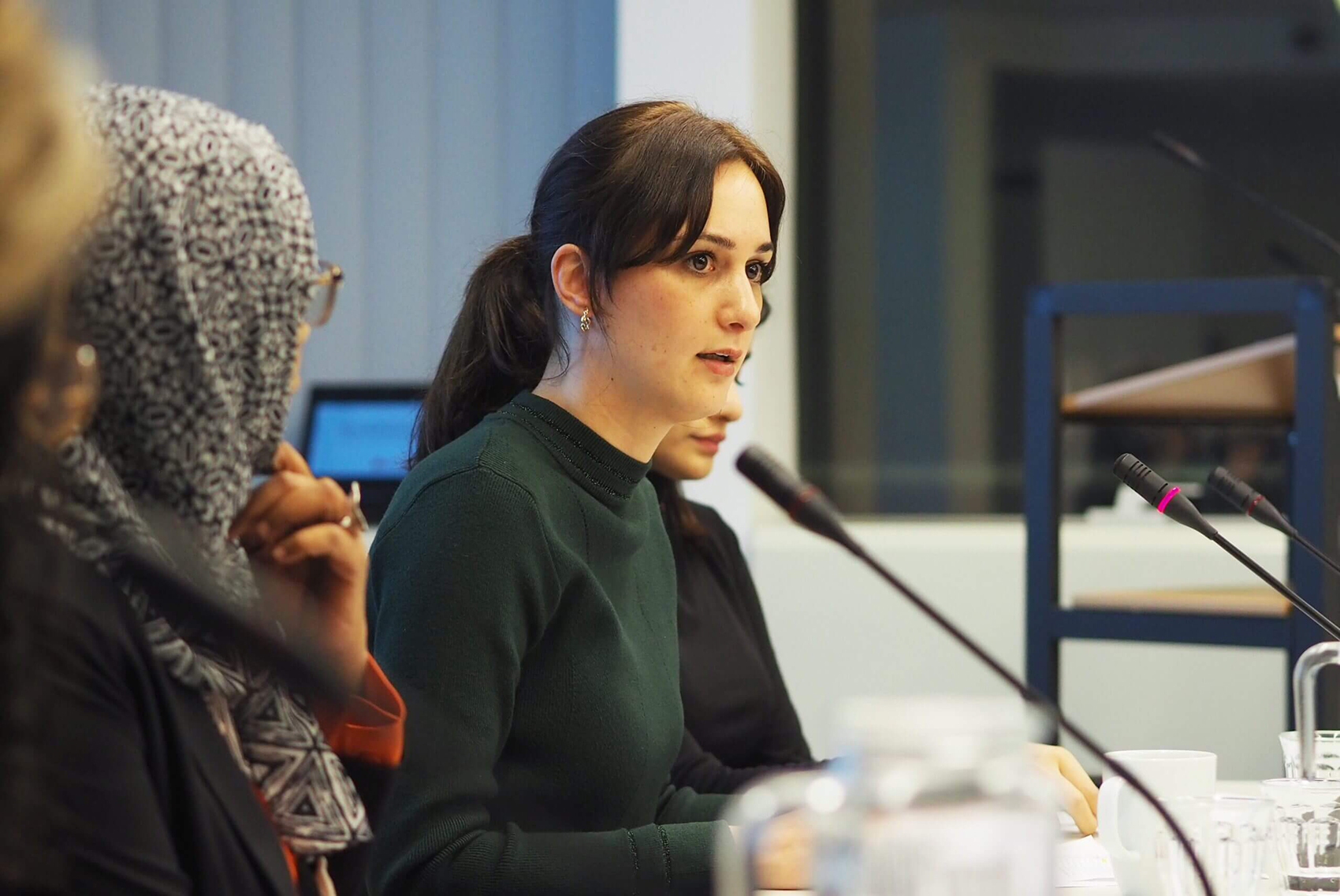
Dalia Hamayel is responsible for IM’s partnerships in Gaza, where organisations work to support women and children in one of the world’s most vulnerable regions. Amid extremely challenging conditions, she works closely with our partners to provide safety, support, and hope. Dalia lives and works in Ramallah, West Bank.
What does your work with IM’s partner organisations in Gaza involve? Can you give an example of how IM’s support makes a difference in people’s lives there?
– IM’s work is both about meeting urgent needs and creating long-term change. Together with Ajyal, we have launched projects where women who have lost everything can learn practical skills – such as baking bread in clay ovens or working in beauty care. They also receive training in entrepreneurship, enabling them to start small businesses in camps and temporary shelters. Despite the constant bombings, 40 women recently completed the programme. Many said they had regained both confidence and a sense of purpose. I particularly remember Sanaa, a divorced mother of six, who said: “We have no steady income. These small businesses are our lifeline and our chance to rebuild our lives.”
Our collaboration with AISHA has been absolutely crucial in providing protection and support for traumatised women and children. They have created safe spaces in refugee camps, provided psychosocial support to tens of thousands of women, offered legal and medical assistance, and distributed hygiene kits. They have even been able to support groups often overlooked in crises – unaccompanied children, cancer patients, and women with disabilities.
What issue or challenge is most urgent for our partners right now?
– It’s really the combination of everything that makes it so difficult. Our partners have to manage an extremely dangerous situation while the whole society around them collapses. Military attacks and forced displacements make it almost impossible for staff to move safely. At the same time, basic systems for healthcare, food, and fuel are breaking down.
Needs are constantly increasing, but the organisations simply do not have enough resources. This keeps them in a continuous state of emergency, with almost no room for long-term planning. That is why it is so important that we can continue to support them – so that they can both protect their own staff and continue delivering life-saving services, despite all obstacles.
What do you think people in Sweden should understand better about the situation in Gaza today?
– The most important thing is to recognise that the crisis in Gaza is man-made. Restrictions on aid, fuel, and medical evacuations are deliberate decisions that lead to deaths and widespread famine. At the same time, homes, schools, water systems, and hospitals have been systematically bombed.
The situation is extremely urgent. Gaza is on the brink of starvation and a total collapse of all social functions. Every day without action costs lives – not only from bombs, but also from hunger, untreated illness, and lack of clean water.
For people in Sweden, it is important to understand that their voices do make a difference. Solidarity, advocacy, and international pressure are crucial to protecting life and dignity in Gaza. Continued support for Palestinian organisations is a lifeline – both for those working in impossible conditions and for the thousands of people they reach every day.
By: Malin Kihlström