“It won’t always be like this”
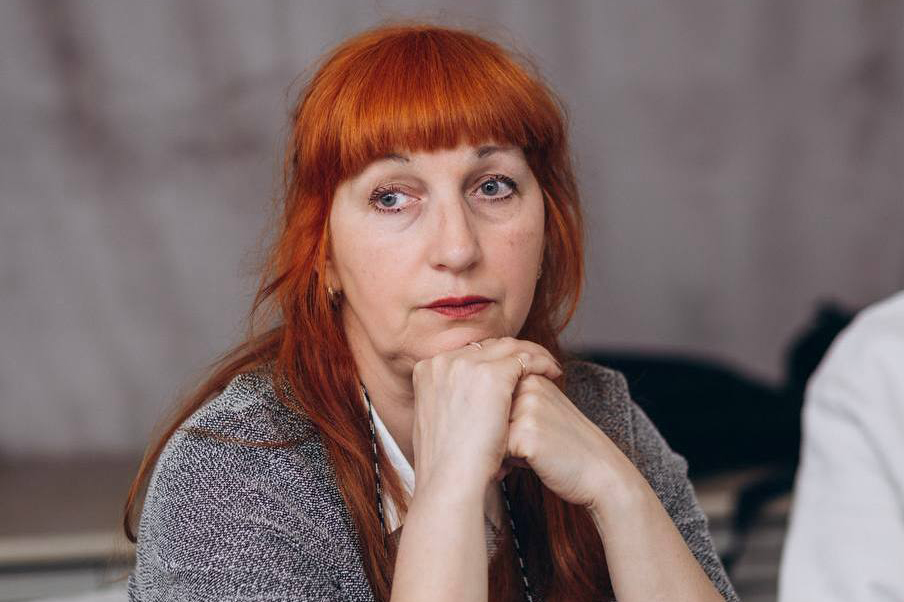
When people say that the war in Ukraine began in 2022, that’s not how Larysa Petrova sees it. “For us, it started back in 2014. We lived with soldiers, checkpoints, and constant tension. People get used to almost anything.”
Larysa is from Mariupol – the city that was all but destroyed during Russia’s full-scale invasion. For her, 2022 was not the beginning, but the culmination of a war that had been creeping into daily life for years. Today, her home is under occupation, and returning is impossible. The images of Mariupol remain, a reminder of what has been lost – and of what still matters.
Fleeing a life that vanished
On 24 February 2022, Larysa was in Kramatorsk on a work trip. When the invasion began, getting home was no longer an option. Trains stopped running, roads were closed, and entire cities were cut off. Contact with Mariupol was lost, along with any way of knowing what had happened to relatives who remained there.
“All information disappeared. Then, little by little, fragments of terrible news began to emerge.”
The evacuation unfolded in chaos: air-raid sirens, panic, and overcrowded trains. People were separated by age and health, often without knowing where they were being sent. Twelve people were squeezed into a tiny compartment; others sat on the floors of the corridors. Mobile phones had to be switched off, curtains drawn.
“We thought the pillars at the station would protect us. It sounds absurd now, but at the time you clung to anything that gave a sense of safety.”
“I wrote on Facebook: ‘I’m traveling blind. I don’t know where I’m going.’”
It was the beginning of life as an internally displaced person – a life in which stability was replaced by temporary solutions and constant uncertainty.
Staying when others have no choice but to flee
Despite opportunities to leave the country, Larysa chose to stay in Ukraine. The decision was about responsibility – and about the people who have no choice.
“If everyone leaves, who will be left?”
In Chernivtsi, she met others who had fled the war. Many were living in cramped conditions, with little privacy, carrying trauma and living with deep uncertainty about the future. There she also connected with the civil society organisation Zahyst, which, with support from IM, works to assist displaced people through practical aid, safe meeting spaces, and a sense of community. For Larysa, this partnership proved decisive – both in helping her rebuild a sense of belonging and in giving her a way to support others.
Supporting those at risk of being overlooked
Together with Zahyst and other humanitarian actors, Larysa has helped establish local support initiatives in Chernivtsi. One priority has been older people – a group that often falls through the cracks in humanitarian responses.
“Older people need more than assistance. They need dignity.”
Many are living alone, have limited mobility, or lack the means to flee. For them, support can be life-saving: food, hygiene supplies, assistive devices – and simply someone who sees them and listens.
When needs persist but support declines
At the same time, the situation is growing more difficult. Humanitarian projects are ending, funding is shrinking – but the war goes on.
“Needs don’t disappear just because projects come to an end. The state cannot shoulder the burden alone.”
Without continued support, many older people and internally displaced families risk being left with nowhere to turn.
Support that makes a difference
With Zahyst’s support, meeting places have also been created where displaced people can gather, talk, and, for a while, feel like more than just refugees.
“If we can create a sense of safety where we are, we find the strength to carry on.”
Her life motto is simple:
“It won’t always be like this.”
Larysa Petrova’s story is a reminder of why support to civil society in Ukraine remains vital. Through partner organisations like Zahyst, IM helps ensure that people forced to flee receive both immediate assistance and longer-term support. The war does not pause, and needs do not diminish. But with the right support, people can continue to help one another – even after almost everything has been lost.
Text and photo: Zahyst
Edited by: Malin Kihlström
By: Malin Kihlström