IM partner office in Gaza hit by drone
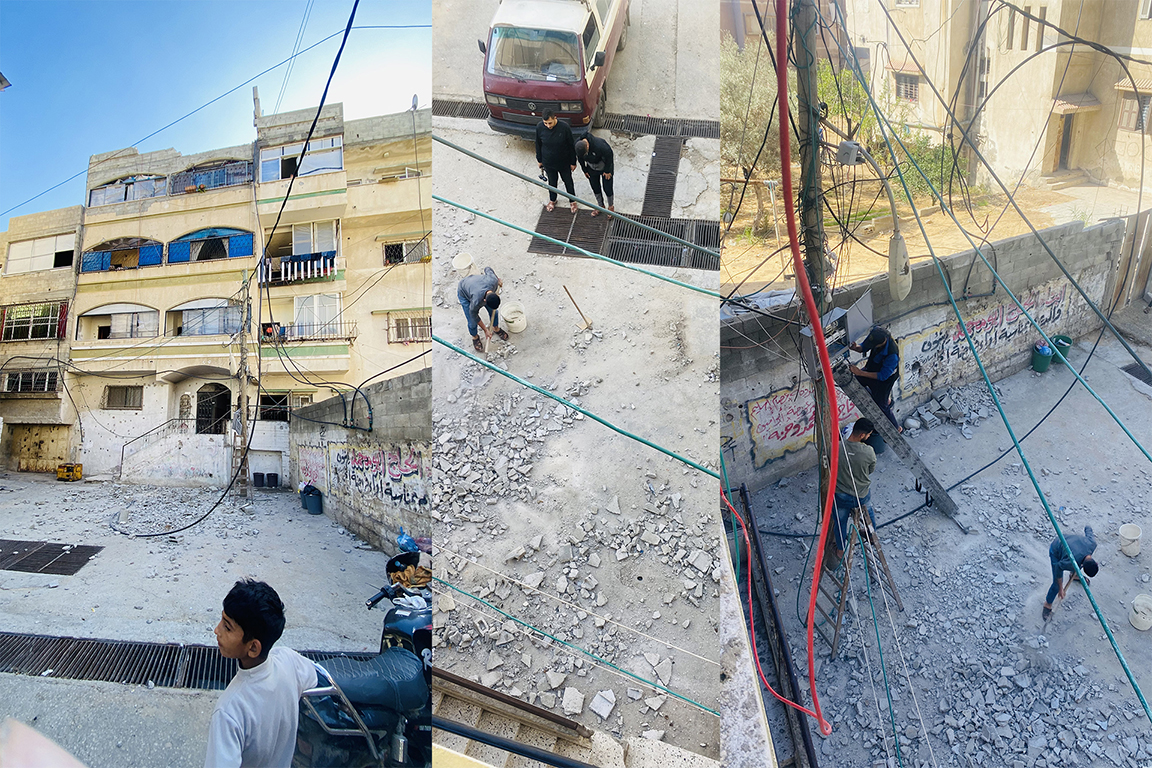
Last Monday, November 9th, the building housing the Gaza office of IM’s partner organisation Ajyal was hit by an Israeli drone. No one was physically injured, but the attack has once again forced the organisation to leave one of its workplaces. For Abdallah Sharsharah, Chairman of the Board of Directors of Ajyal, one image is particularly difficult to forget: his colleague, a psychologist who normally helps others cope with fear, was herself so frightened that she was unable to speak.
The roof of the building has sustained significant damage. The water network and solar power system were hit, part of the rooftop parapet wall collapsed, and furniture and equipment were damaged.
Staff were evacuated and relocated to another Ajyal office. But the building is not only a workplace. It is also home to several families, and another organisation operates from the same building.
When Abdallah Sharsharah learned what had happened, his first thought was therefore for the people inside.
“My first thought was for the safety of my colleagues and the families in the building. I cannot forget the expression on my colleague’s face. She is a psychologist, but she was so frightened that she was unable to speak. She helps others cope with fear, yet at that moment she herself needed safety and support.”
He also recalls the children in the building and the fear on their faces.
“It was heartbreaking to see the children facing danger inside the place where they live.”
Helping others while facing the same reality
Ajyal works with people affected by war and displacement in Gaza. Through the organisation’s work, children, women, young people and persons with disabilities receive psychosocial support, information and help accessing services and other forms of support.
But the people providing that support are themselves living through the same war.
“Our staff are part of the affected community. They worry about their families and, at the same time, about the people they support. The psychological impact does not end when we leave the building,” Abdallah says.
This latest attack is far from the first time Ajyal’s operations have been affected. In October 2023, the organisation’s main office was damaged when a neighbouring building was bombed. In October 2025, another of its main offices in Gaza City was destroyed. The same building also housed the offices of three other local organisations.
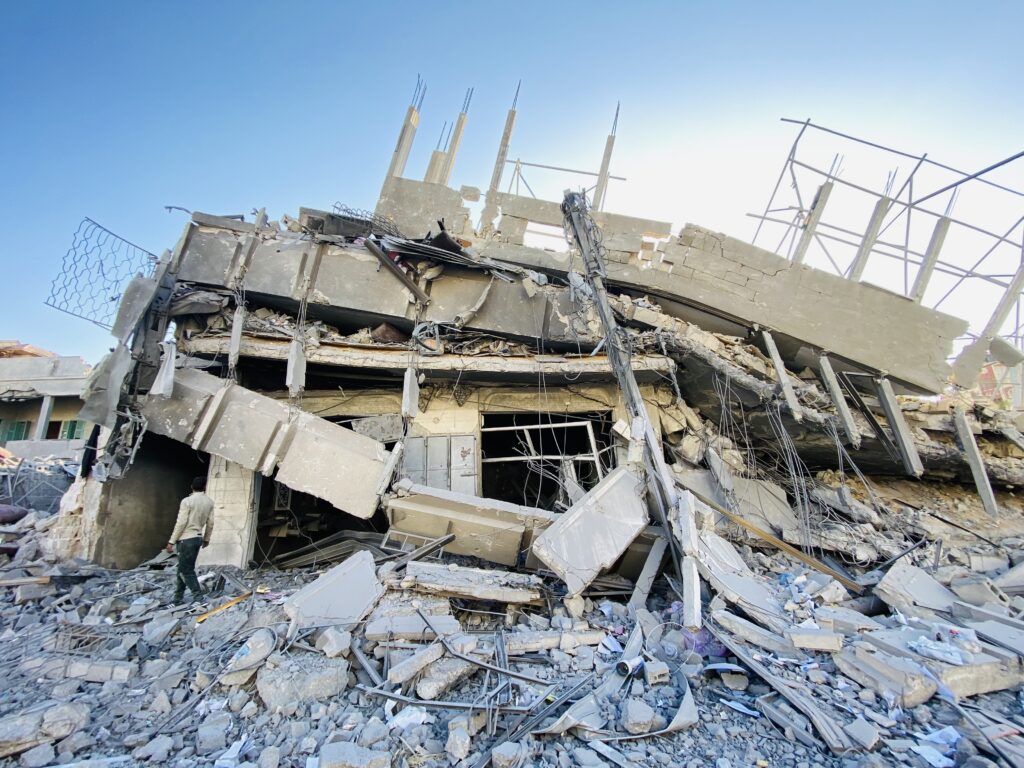
Every time premises are damaged or destroyed, Ajyal must devote time and resources to rebuilding the basic conditions it needs to work.
“We are trying to help people while living through the same dangers ourselves. We constantly have to rebuild the basic conditions we need to do our work, while people’s needs continue to grow.”
Other IM partner organisations in Gaza have also been severely affected. In September 2025, the area outside the office of IM partner AISHA was hit in an Israeli airstrike, killing a staff member, the child of another staff member and a pregnant woman who was visiting the office, while several others were injured.
The work must continue
The damaged office cannot be used again until the premises have been assessed for safety and the necessary repairs have been carried out. Among other things, the water network and solar power system need to be repaired, as does the damage to the roof.
In the meantime, Ajyal is trying to keep its operations running through alternative arrangements.
For Abdallah, the reason is simple: the people Ajyal works with still need support.
“If we stop our work, it could mean that a traumatised child does not get help, that a woman in need of support goes without it, or that a family is unable to access an essential service.”
But the determination to continue should not be mistaken for staff having become accustomed to the situation, he stresses.
“Continuing our work does not mean that we have become accustomed to fear, or that our capacity to endure it is limitless.”
To continue its work, Ajyal now needs, among other things, to repair the premises, replace damaged equipment and find alternative working arrangements for staff. Abdallah also stresses the need for psychological support for employees and flexible funding that enables local organisations to keep operating when the conditions for their work suddenly change.
Above all, however, he calls for protection for civilians and humanitarian workers.
“Behind every report are people”
There is one image in particular that Abdallah wants people outside Gaza to remember.
“I would like people to remember the face of the psychologist who was unable to speak from fear, and the faces of the children who felt unsafe inside the building where they live.”
Because behind the reports of yet another damaged office lies something much bigger, he says.
“Behind every report of a damaged office are people, families and services that the community needs.”
Ajyal is calling for international solidarity that translates into concrete protection and sustained support. The organisation also stresses the importance of independent and effective investigations into incidents affecting civilians and civilian institutions, and accountability where violations are established.
For Ajyal’s staff, the work continues. But those who help others also need to be safe themselves.
Facts: Ajyal
Full name: Ajyal Association for Creativity and Development (ACCD)
Founded: 2003
Activities: Ajyal is a locally rooted Palestinian organisation working in Gaza. The organisation focuses in particular on empowering children, young people and women through psychosocial support, education, protection initiatives, and efforts to promote social and economic empowerment.
Partnership: Ajyal has been an IM partnerorganisation since 2019.
Text: Malin Kihlström