Tania had to start over – but not from scratch
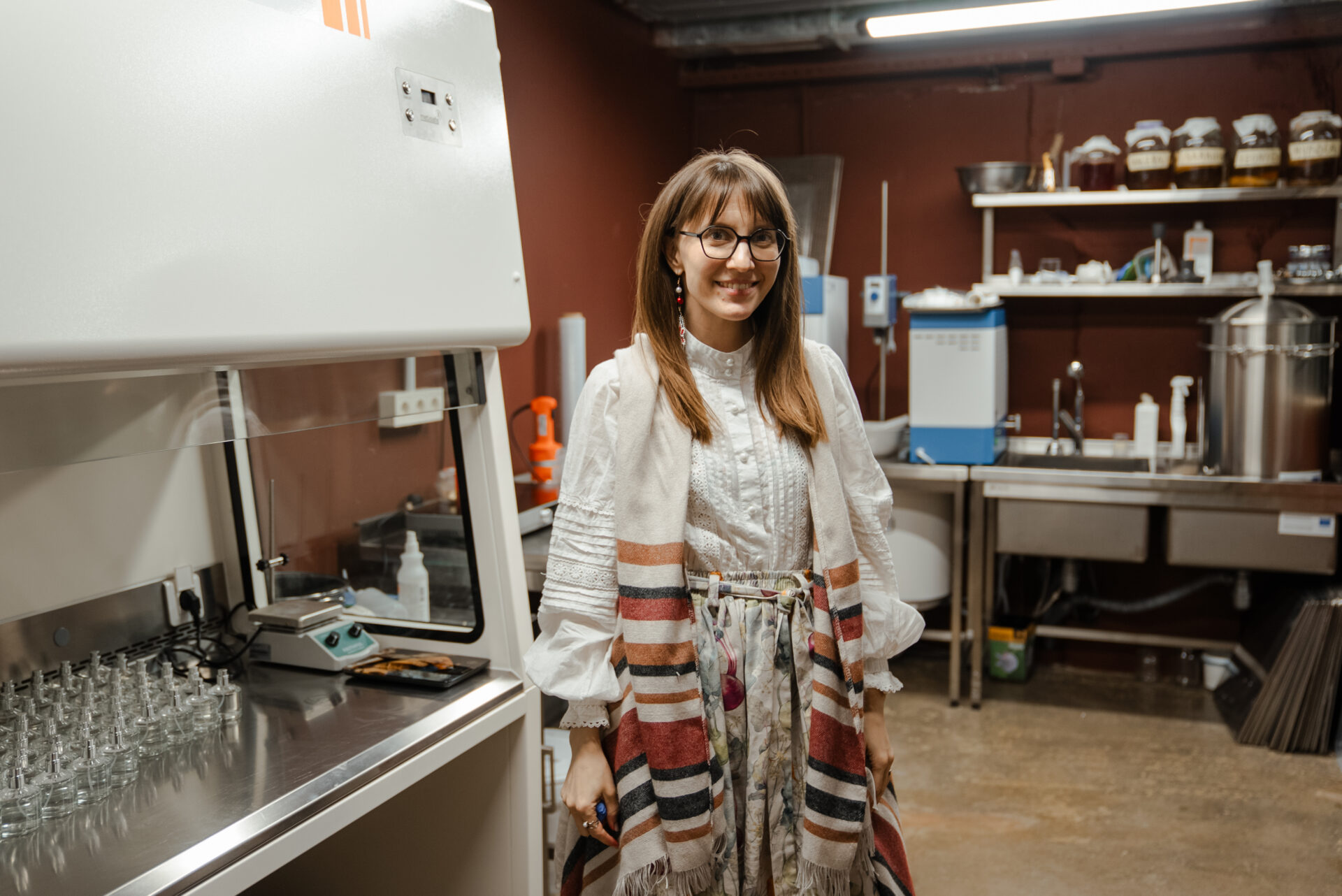
War destroys more than homes, workplaces and infrastructure. It can also take away people’s ability to work in their field, earn a living and continue to develop professionally. For Tania, a biotechnologist from Kharkiv, the war brought an abrupt interruption to a lifelong career in research and pharmaceutical development.
Today, she is back in the laboratory. With support from IM, she works at the Research and Product Design Center POLE in Ivano-Frankivsk, where she can once again put her expertise to use and continue to develop within science and biotechnology.
“I was able to return to what I love, to continue developing in science, experiments and research, and to come back to this fascinating laboratory life. I truly love my profession and what I do now,” says Tania.
A life and career put on hold
Tania had worked in pharmaceutical development, chemical and pharmaceutical research, and biotechnology. Science had always been an integral part of her life.
“Even before I had a child, I worked on pharmaceutical drug development, chemical, pharmaceutical and biotechnological research and development. Science has always been part of my life,” says Tania.
When Russia launched its full-scale invasion, she was forced to leave Kharkiv together with her family. In Ivano-Frankivsk, there were few opportunities to continue working in her field.
“Western Ukraine, where I ended up after being forced to leave Kharkiv, wasn’t as rich in manufacturing companies or the pharmaceutical industry where I had worked. Compared to the city where I used to live, the opportunities were very limited. In Ivano-Frankivsk, I couldn’t find pharmaceutical research and development where I could continue working in my field.”
For people forced to leave their homes, war often means having to start many aspects of life all over again. Jobs, social networks and familiar communities disappear, while constant uncertainty makes it difficult to plan for the future.
For Tania, it also meant putting her professional life on hold.
For a period, she devoted herself to motherhood, but eventually realised that she wanted to return to science and research. At first, she was invited to join a team of fellow Kharkiv residents who were already working in Ivano-Frankivsk and needed her expertise.
An important turning point came when Tania discovered the Research and Product Design Center POLE – a professionally equipped biolab where researchers work, among other things, on biodegradable and environmentally friendly alternatives to plastic and develop new materials.
“Here at POLE, I found like-minded people. I think we collaborate really well and can give each other exactly what has been missing. I can apply my expertise here, and POLE helps me grow professionally because everything needed for that is here – professional equipment, an inspiring environment and support,” says Tania.
When development aid creates opportunities
Today, Tania works with biotechnological processes and laboratory research. She has been given the opportunity to continue researching and developing within a field she loves.
Her story is a concrete example of what long-term development aid can make possible. It is not only about responding to urgent needs when disaster strikes. It is also about creating the conditions people need to earn a living, use their skills and help build the societies of the future – even under extremely difficult circumstances.
Making this possible requires more than a workplace. It requires equipment, knowledge, networks and environments where people can grow.
POLE was established by the Ukrainian organisation Metalab, whose institutional work has received support from IM for several years.
“Thanks to the support of our partners, I can carry out many of my projects in the POLE biolab because the equipment, the space and the right conditions are all here,” says Tania.
Regaining her independence
For Tania, being able to work in her field is not the only thing that matters. It is also about being able to grow professionally and feel independent.
Despite being forced to leave both her home city and her previous professional environment, she has found a new path back to science – in a new city and within a new professional context.
Her story shows what long-term development aid can make possible.
It can mean building institutions, creating employment opportunities and strengthening local communities. It can mean giving people access to education, equipment and networks. And sometimes, it can be something as tangible as helping a researcher return to the laboratory.
For Tania, it means being able to continue her work in science. For Ukraine, it means that knowledge, skills and hope for the future can be put to use.
And that, too, is development.
Edited based on source material from Metalab: Malin Kihlström