They are growing hope for the future
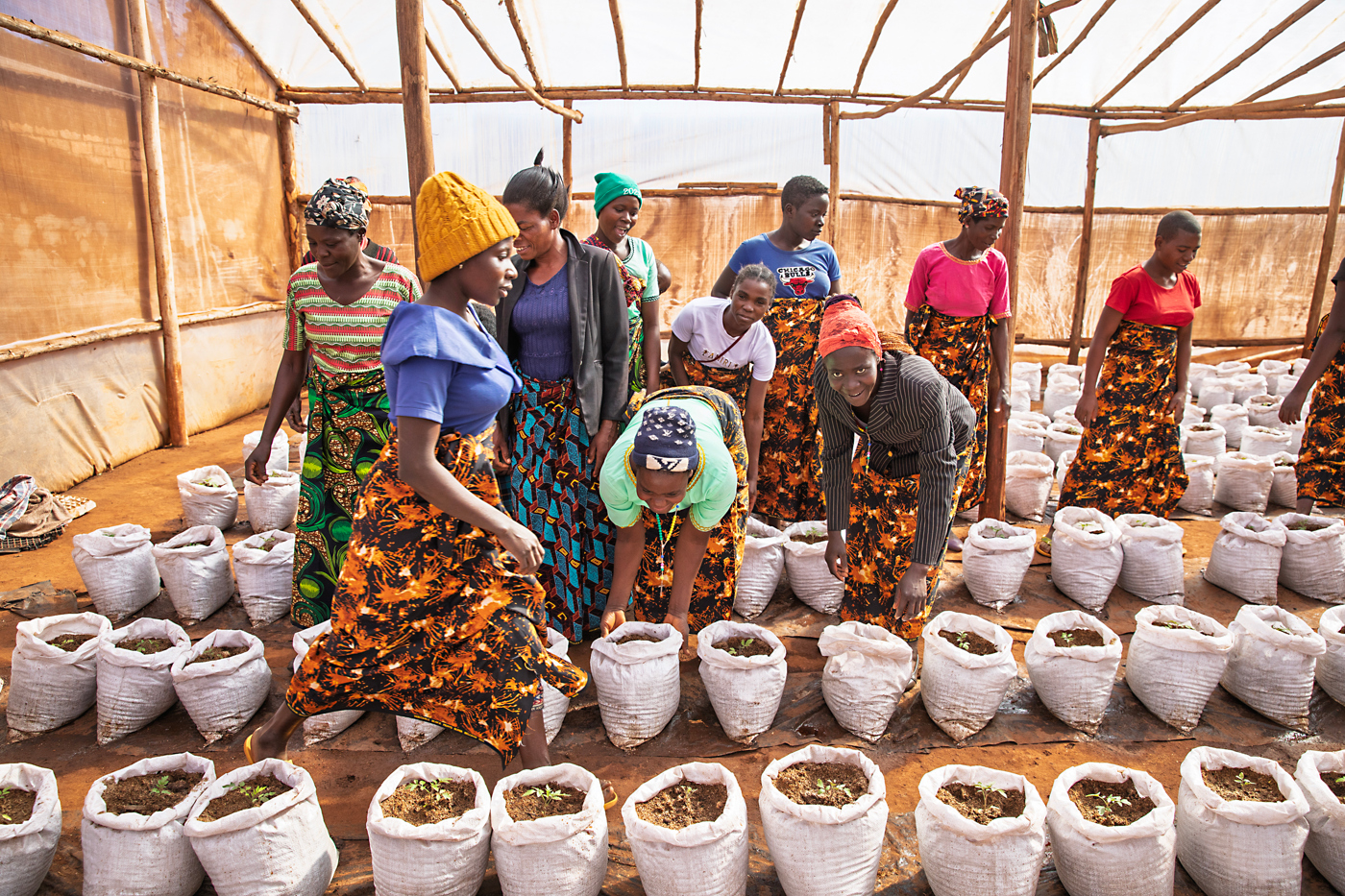
Two boys have caught today’s lunch for their family: three dead mice. Just a few hundred metres away, a group of women are picking ripe tomatoes in their greenhouse. The same village. Two very different realities. The difference is long-term development work supported by IM.
“Come here, and I’ll show you what poverty really looks like.”
Gift Numeri from IM’s partner organisation Point of Progress is standing in the scorching midday sun with two small boys, perhaps six or seven years old. He is holding a crumpled T-shirt and carefully puts his hand inside one of the sleeves.
“The boys have been out looking for something their family can eat today,” he says, as he reaches for something inside the sleeve. When he pulls his hand out, he is holding a small, pathetic-looking dead mouse by its tail, between his thumb and forefinger.
“No one wants to eat mice. But here, people have to in order to survive.”
He speaks seriously, fixing us with a steady gaze, as if to emphasise that this is real – and perhaps to see how we react. Mice are one of the few sources of protein available to families living in extreme poverty.
He pulls out two more mice. The little boys look on wide-eyed, apparently wondering what all the fuss is about their catch.
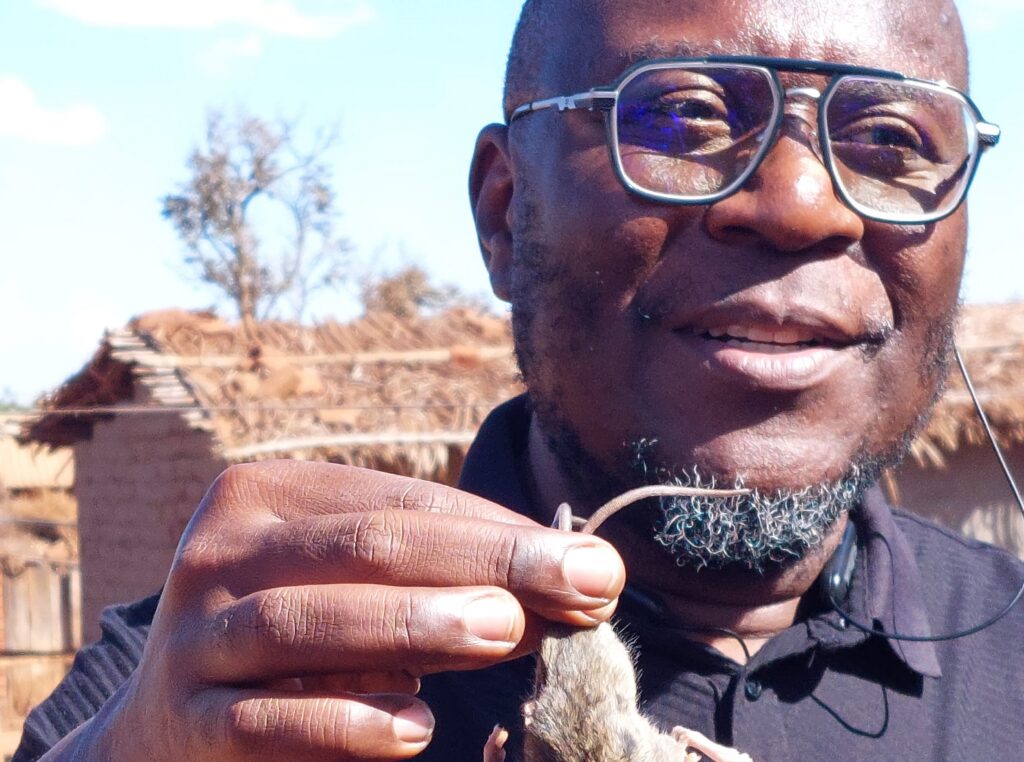
“This is why I run an organisation that works every day to make life just a little bit better for people out here in the villages,” says Gift. He puts the mice down and hands the T-shirt back to the boys, who quickly grab it and dash off between the houses.
“When a woman’s financial situation improves, life gets better for her children too, both boys and girls.”
The image of the dead mice, and the meaning behind his words, stays with us. The reality of poverty becomes painfully clear.
The climate crisis shapes life in the village
The village, about an hour’s drive from the capital Lilongwe, is much like many others in Malawi. Around 80 low houses, built from sun-dried bricks with thatched or corrugated metal roofs, are scattered across the scorched earth. Children play and chickens run between the houses. In a few enclosures, goats bleat as they chew on dry stalks. What sets this village apart from many others we have passed on our way here are two large greenhouses rising above the low buildings.
At the first greenhouse, we are greeted with singing and dancing. The women in the village’s farming group welcome us with pride. They built the greenhouses themselves through a collaboration between Point of Progress, IM and the women’s group.
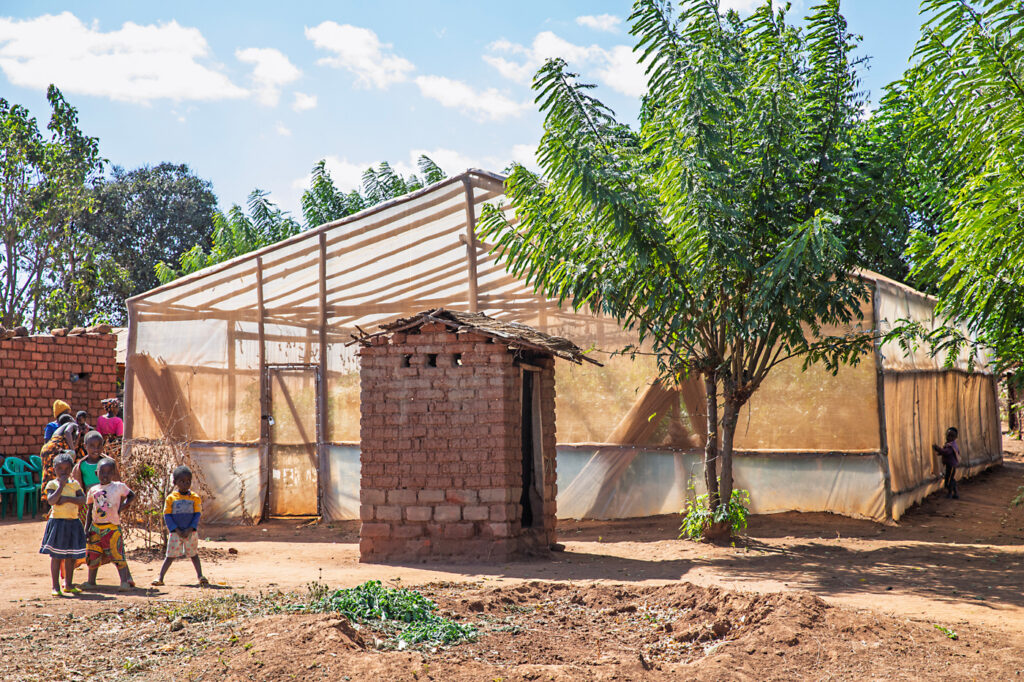
“The climate crisis has made it increasingly difficult to grow crops in open fields. Unpredictable weather, droughts and storms destroy harvests, and farmers also need to use more pesticides. The greenhouses allow the women to grow crops in a controlled environment throughout the year and create more secure sources of income,” Gift explains.
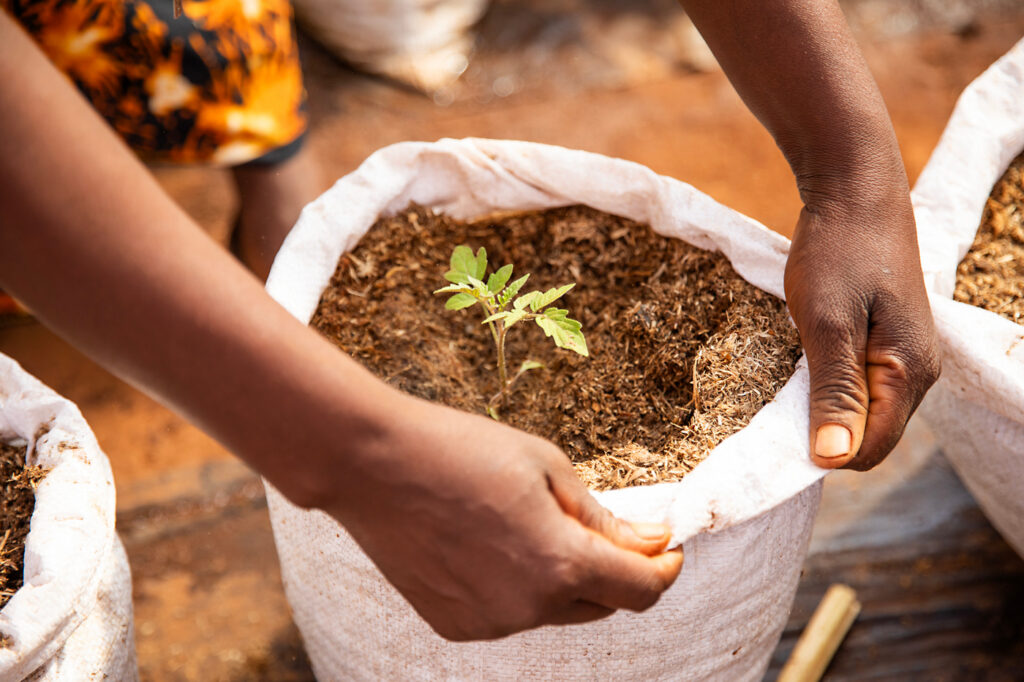
The women have received training in tomato cultivation, irrigation and the production of organic fertiliser. Point of Progress provided the seeds for the first tomato plants and the materials for the greenhouses. The rest is their own work.
The first girls in the village to graduate
The women’s group should actually have been much larger today. Several members are missing. They have gone to celebrate three girls who have just graduated from secondary school – the first ever in the village’s history.
This is no coincidence. For several years, Point of Progress has been working to strengthen household finances and create opportunities for children to stay in school. For the women – and for us – the graduation celebration is tangible proof that change is possible. But it takes time.
The contrast suddenly feels enormous. Just moments ago, we were standing with two boys who had three dead mice stuffed into a T-shirt sleeve. Now we are talking about three girls who have just become the first in the village to graduate from secondary school. Suddenly, there is a sense of hope, and the value of IM’s work becomes strikingly clear.
Veronica now dares to dream bigger
Inside the first greenhouse, the dry heat outside gives way to humid warmth and the scent of soil and tomato plants. A drip irrigation system connected to a 15-litre water tank creates a pleasant growing environment. Hundreds of small plants stand in neat rows, each growing in a sack filled with soil. There are 320 plants in total, we learn, and they were sown just one week before our visit.
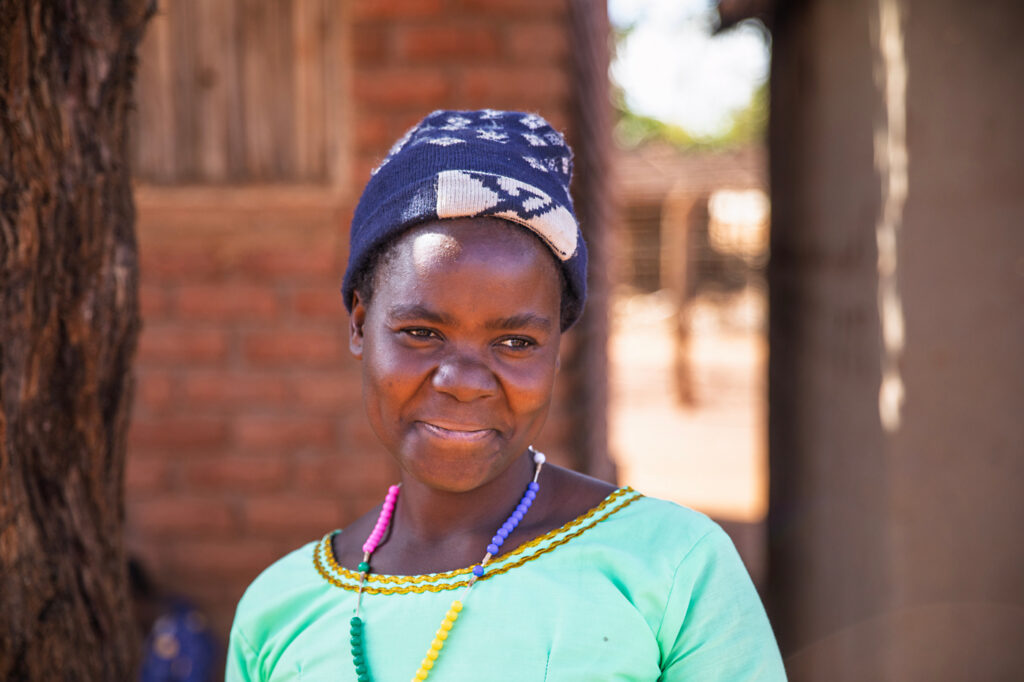
Thirty-two-year-old Veronica Goodwel shows us around.
“Many women gave up in the beginning. The results didn’t come straight away. But I knew it could work,” she says.
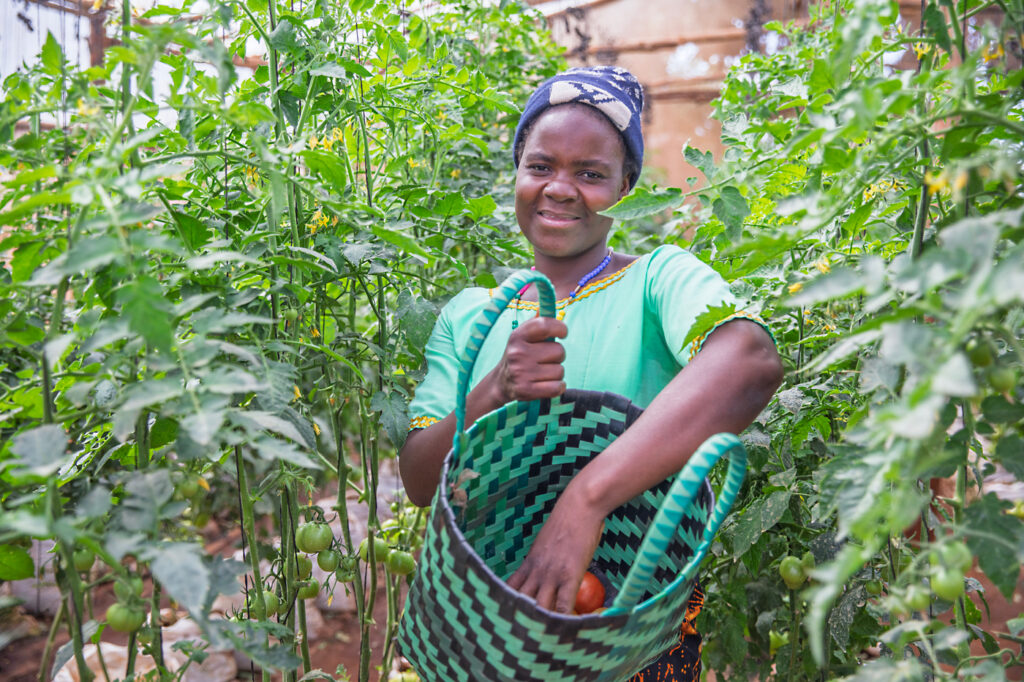
Today, 18 women share responsibility for the crops. The income has enabled Veronica to buy goats and chickens and pay school fees for her children. In the future, she hopes to buy a motorbike and more livestock. The tomatoes also provide much-needed nutrition for her family.
Veronica herself never had the opportunity to continue her education beyond primary school. Her parents could not afford it, and by the age of 17 she was already married and a mother. Now she is on her way to breaking the cycle of poverty and giving her children better opportunities than she had herself.
The air is even more humid in the second greenhouse. It is packed with lush, tall tomato plants, their branches heavy with both green and ripe, bright red tomatoes.
“It takes 90 days from sowing to harvest, and we can harvest and sell tomatoes throughout the year,” Veronica explains.
When development aid leads to independence
The women also run a savings and loan group, where income from tomato sales provides start-up capital for their own small businesses. One woman bakes bread, another makes soap, while others sell fruit and vegetables. Veronica buys tomatoes at the market and resells them.
Every woman in the group we speak to tells much the same story. They describe how the greenhouses have changed their lives, how their incomes have grown and how their children are going to school. How life has become easier.
It is easy to think of development aid in terms of food and blankets during emergencies, or project reports and administration. But here, it is about something much bigger. It is about giving people the opportunity to generate their own income, become more resilient in the face of climate change and give their children a different future. It is about a mother being able to pay school fees. About a girl graduating from secondary school – perhaps the first, but certainly not the last.
This is what real change looks like. Step by step. One greenhouse. One harvest. One school fee. One graduation.
And, ultimately, a future where no child has to hunt mice just to have something to eat.
Text and photo: Malin Kihlström
RESEARCH: Economic empowerment strengthens resilience to the climate crisis
A new study* covering 37 countries in sub-Saharan Africa shows that women with access to savings, credit and their own income are better able to cope with climate-related crises than women without financial resources.
At the same time, the researchers emphasise that genuine long-term resilience requires more than money. When economic opportunities are combined with education, collective organisation and greater gender equality, households and local communities are better equipped to face climate change.
Source: carbonbrief.org
Why does IM focus on women and girls?
Strengthening the rights of women and girls is both a matter of human rights and an effective way to achieve long-term development. It is not about excluding men and boys. It is about giving half the population the same opportunities to contribute to the development of their families, communities and countries.
When women have the opportunity to get an education, earn a living and make their own decisions, this can lead to:
- More children attending school
- Increased household incomes
- Improved health and food security
- Communities that are more resilient in the face of crises
When women have the opportunity to thrive, society as a whole often benefits.