“Women’s bodies become a battlefield in war.”
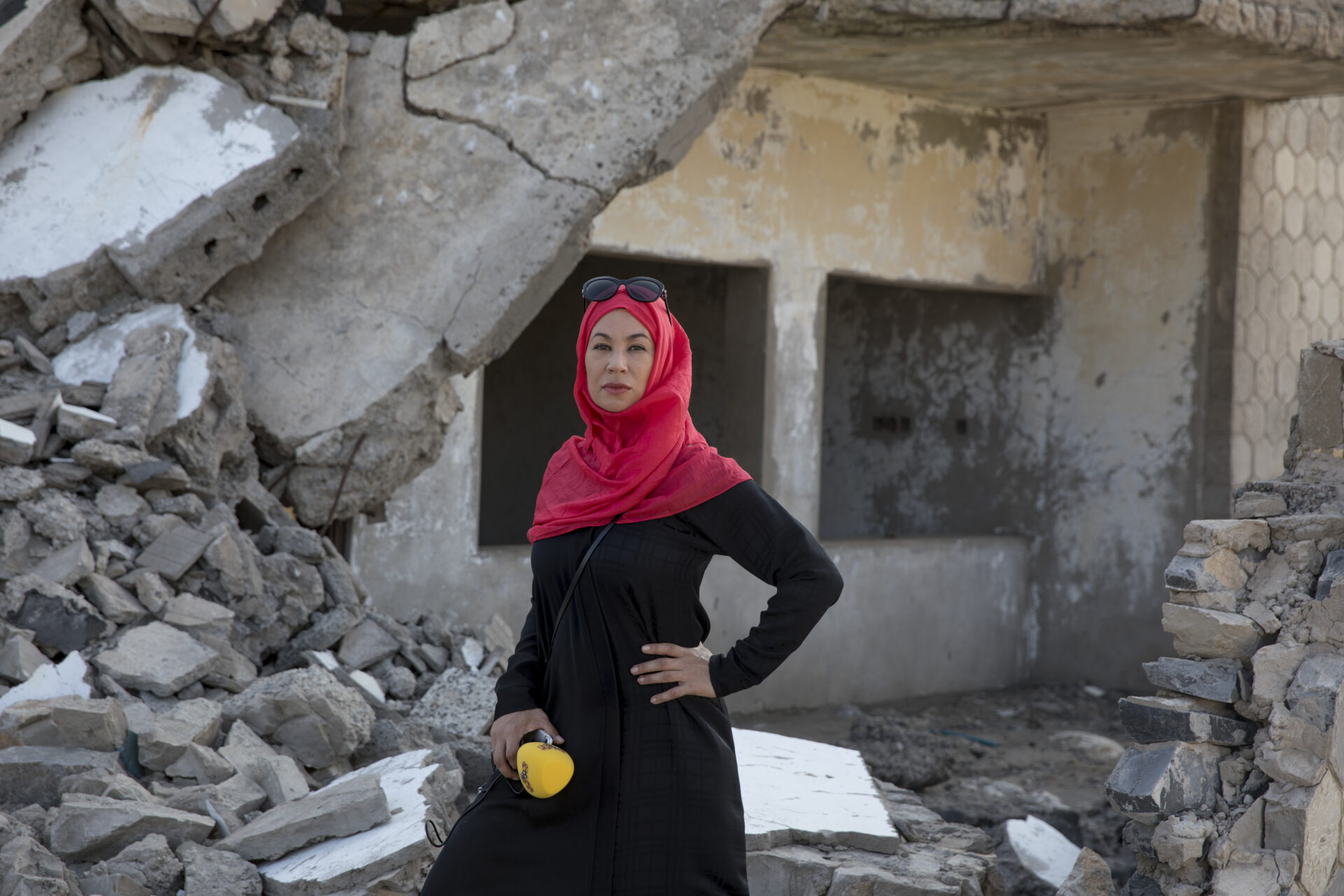
She has reported from some of the world’s most brutal conflicts – including Afghanistan, Syria, Iraq, Ukraine and the Congo. As a war correspondent, Magda Gad has for many years lived in close proximity to people forced to flee, with a particular focus on women’s experiences. In this interview, she speaks about the invisible consequences of war, the most urgent protection needs, and the misconceptions that shape perceptions of women on the move.
You have met women fleeing some of the world’s most acute conflicts. What is often missing from the statistics – what experiences or stories do these women carry that the outside world tends to overlook?
– It is more dangerous for women than for men to flee. Women’s bodies become a battlefield in war. They are subjected to rape, sexual violence and forced marriage. Many also carry a deep sense of shame and suffer in silence, without receiving the help they need – either physically or psychologically.
Women are often forced to shoulder the greatest responsibility for the family. They care for children, the elderly, the sick and the injured. When men are killed, disappear, become soldiers, stay behind to guard the home, or are affected by PTSD or alcoholism, the entire burden of providing for the family – and of parenting – falls on women.
Women flee over long distances, sometimes while pregnant, without access to safe places to give birth. They carry memories of extreme violence – inflicted both on themselves and on their children. They frequently describe nightmares, sleep disorders and panic attacks. I have met women who told me they were forced to bury their dead children with their bare hands during flight.
Women also become dependent on smugglers or men who offer transport, protection, food or water in exchange for sex or labour. Mothers may be forced to marry off their daughters or watch their sons become soldiers. Generations are lost, yet women’s efforts to hold families and communities together are almost never acknowledged.
Many reports show that women on the move are particularly exposed to gender-based violence, trafficking and lack of maternal healthcare. Based on your experience, what are the most urgent protection needs for women on the move in places such as Gaza and Ukraine right now?
– Women on the move have no safety. There are no secure places to sleep, wash or even use the toilet. Access to food, water and hygiene items is severely limited. Menstrual products, soap, nappies and baby food are primary necessities, yet they are not treated as such.
Abuse follows women into refugee camps. Women are afraid to sleep in dark tents and are exposed to violence even when they leave the camps to collect firewood or water.
In Gaza, hospitals have been bombed and women lack access to maternity care and delivery wards. They cannot guarantee safety or food for their children. In Ukraine, women are forced to shelter in basements, and many are exploited by traffickers at border crossings. In the Congo, rape kits ran out earlier this year – the medicines needed to prevent pregnancy and HIV after rape.
Access to contraception, maternity care, caesarean sections and post-rape care is urgent – yet it is not classified as such. The same applies to mental health care and psychosocial support for women who have experienced trauma or lost children.
In war, women are often forced to carry a double burden – both holding families and households together and managing the threats and abuse directed at them. How do you see women’s roles and vulnerability changing over the course of a conflict, from the initial flight to a more prolonged existence in exile or as internally displaced persons?
– When women flee, they carry only what they can hold in their hands, and the journey is extremely dangerous. The collapse of society also means that their support networks disappear.
When they try to rebuild a daily life, their work goes unrecognised, despite being essential to society as a whole. They secure food and water, cook, care for households and children, teach when schools are destroyed, look after traumatised men, organise daily life and create a sense of safety. Women struggle to keep families together and to build new homes in exile.
Livelihoods often become dependent on the shadow economy, where the risk of exploitation is high. Vulnerability never ends – it simply changes shape.
What misconceptions or prejudices about women on the move do you most often encounter in the international debate?
– Women are often reduced to passive victims. In reality, they are the ones who rebuild daily life when everything has collapsed.
There is also a belief that women are more protected because more men are fighting on the front lines. But being a woman or a girl is often more dangerous than being a soldier.
Another common misconception is that it is primarily men who flee. Images from boats and border crossings often show men, but in reality women and children make up 70–80 per cent of all refugees and internally displaced people in most conflicts. Yet their specific needs and vulnerabilities are far too rarely highlighted.
Photo: Private
By: Malin Kihlström